
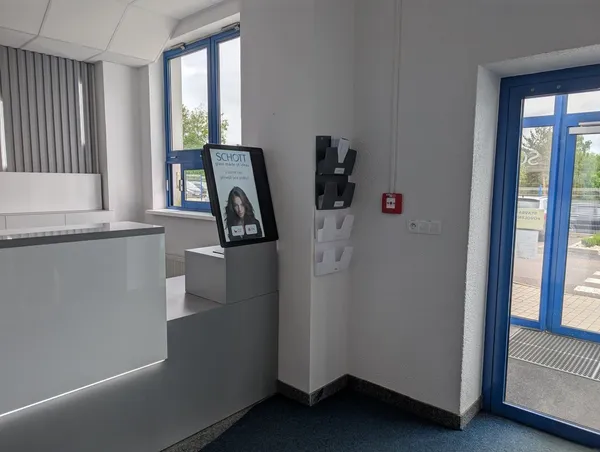
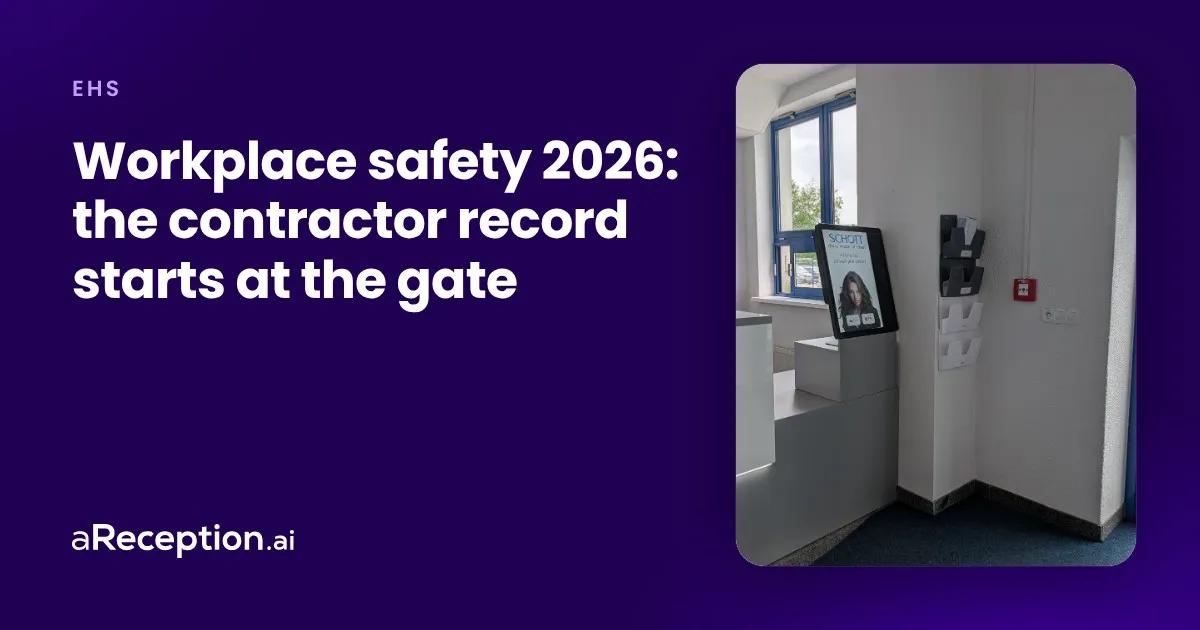
Workplace safety 2026: the contractor record starts at the gate
Contractors sign nothing new this year. But the question of who was on site when, with which induction, comes up more often. You can only answer it from what was recorded at entry.
 Mirek Pachl, Co‑founder and CBO, aReception.ai · Updated · 3 min read
The internal audit before the external one
The auditor picks a day in March and asks: “Which contractors were working in the hall that day, and what induction did their people have?” The EHS technician has the answer in three places. Names and times are in the visitor book at the gatehouse. Signed inductions sit in a binder in the office. The site risk acknowledgment is partly printed and partly in email. Nobody neglected anything; every signature exists. Putting it together still takes the whole afternoon.
EHS technicians describe this scene to us more and more often, usually adding: “We don't want anything out of date when the inspectors come.” One safety auditor put it briefly: “What isn't documented didn't happen.”
What 2026 changed and what it didn't
For contractor entry, 2026 adds no new form. Inductions, the site risk acknowledgment and the visitor book stay the same.
What changed is the question plants bring to us. It used to be enough to have the signatures filed somewhere. Now they want to show, for a given day, who was on site, who they came to see and which induction was valid. The pressure comes from internal audits, from customers, or from a group that wants the same rules at every plant.
The record is pieced together afterwards
Each of the three sources is fine on its own. Only people's memory connects them. The visitor book knows nothing about inductions, and the binder can't tell whether the technician who signed actually came that day. When a contractor sends someone else instead of the inducted fitter, the signatures in the binder won't show it.
An EHS technician at a foundry described it exactly: “It's nice that he gets the paper, but we have no proof anywhere that he really got it.” A reliable record is created at one moment only: when the person comes through the entrance. That is when you know who they are, when they arrived, which induction is valid and where they signed. Anything written in later is a reconstruction.
So the plants we talk to stop looking for a better binder and change what happens at the gate. The contractor completes the site risk acknowledgment before arrival and signs the induction in advance or on site. Both are then attached to the entry record. The guard copies nothing, and the EHS technician has nothing to match up before the audit. Every entry holds the name, the time, the valid induction and the signature together.
What it looks like in Lozorno
Artifex, a supplier of automotive interiors, receives more than 220 visitors a month at its plant in Lozorno: contractors, subcontractors, auditors and job applicants. It used to run a paper gatehouse. Today everyone goes through the safety induction on the kiosk and signs it electronically. That adds up to more than 73 signed inductions a month, each tied to a named person and the time of entry.
The induction record is created at the moment of entry, not afterwards. The Artifex Lozorno case study describes the whole process.
Keep reading
Related articles and case studies
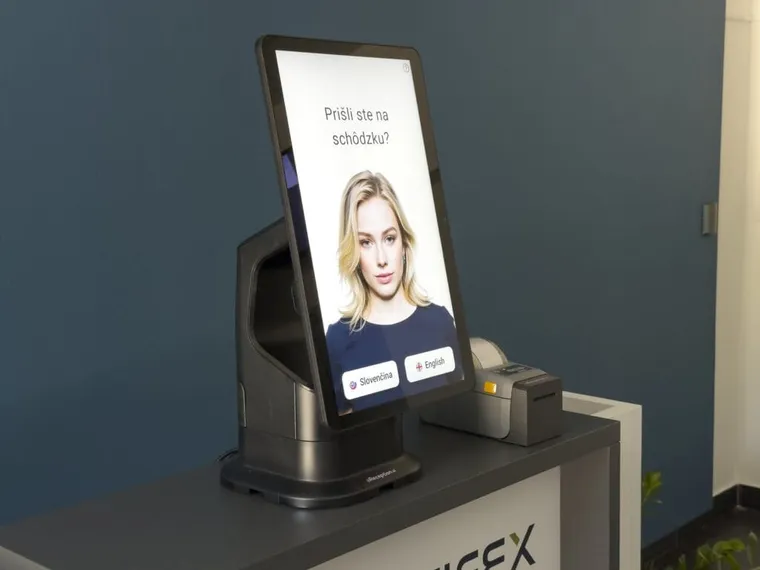 Manufacturing and industryArtifexLozorno, Slovakia
Visitor and contractor check‑in at an automotive supplier: bilingual, without a permanently staffed front desk.
- saved every month
- €1,700
- visitors a month
- 220+
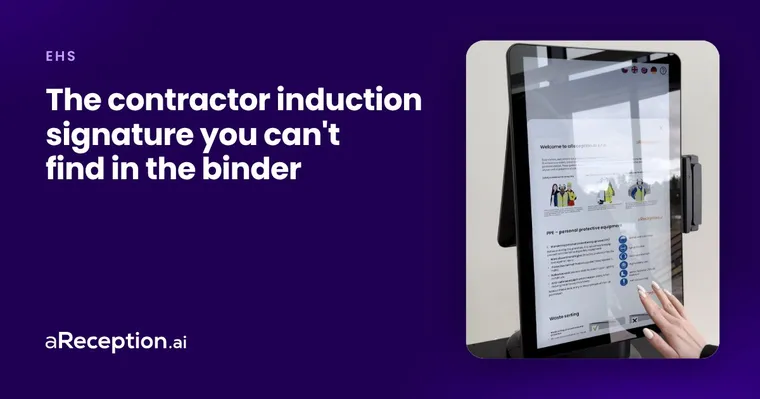 BlogThe contractor induction signature you can't find in the binder10 October 2026 · 3 min read
After a contractor's accident, someone searches the binder for their induction signature, and often it isn't there. How Artifex handles 73+ inductions a month.
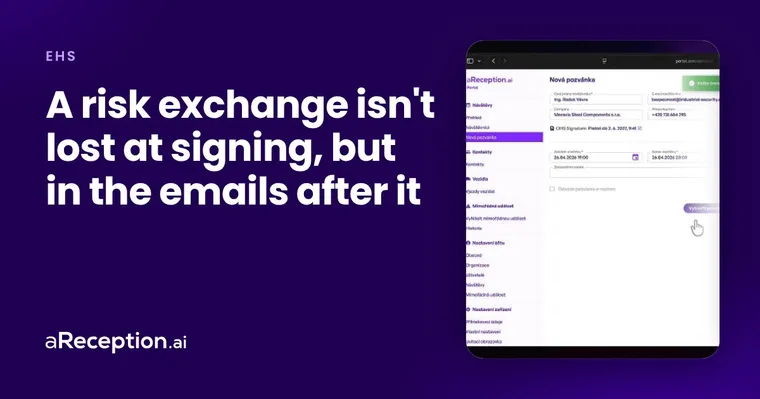 BlogSigned risk acknowledgments get lost in the emails after signing10 October 2026 · 3 min read
Plants do get risk acknowledgments signed by their contractors. The signed version gets lost afterwards, in emails and binders. How Model Obaly in Opava solves it.
Piecing together contractor entries before an audit?
In 15 minutes, we'll show you the induction at the gate, the signature and the report listing each person in the Portal.
Got it. We will get back to you within one business day.
In the meantime, watch a one‑minute video from a live site.
Pick a time nowTrusted at 70+ sites
Stora Enso 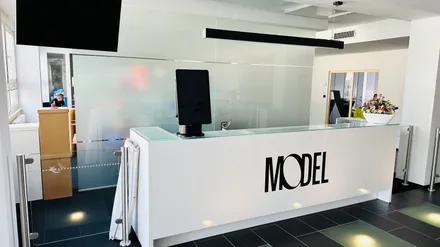
Model Obaly 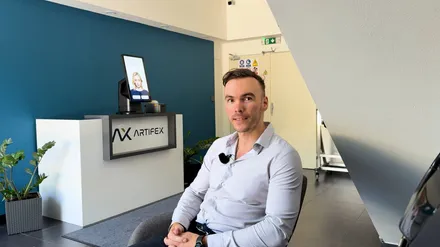
Artifex 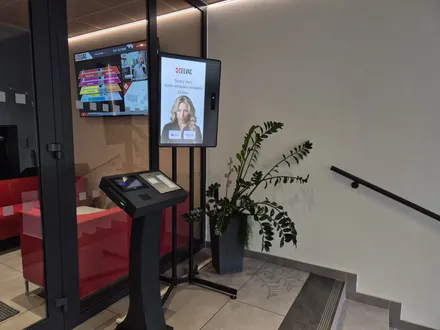
ELVAC


 Filip, Tomáš or Luboš will replySales and deployment at aReception · we reply within one business day